Chord Substitutions on Guitar: How to Make Progressions More Interesting
Learn chord substitution techniques for guitar - relative minor substitution, tritone subs, diatonic substitutions, and how to use them in your own playing and songwriting.
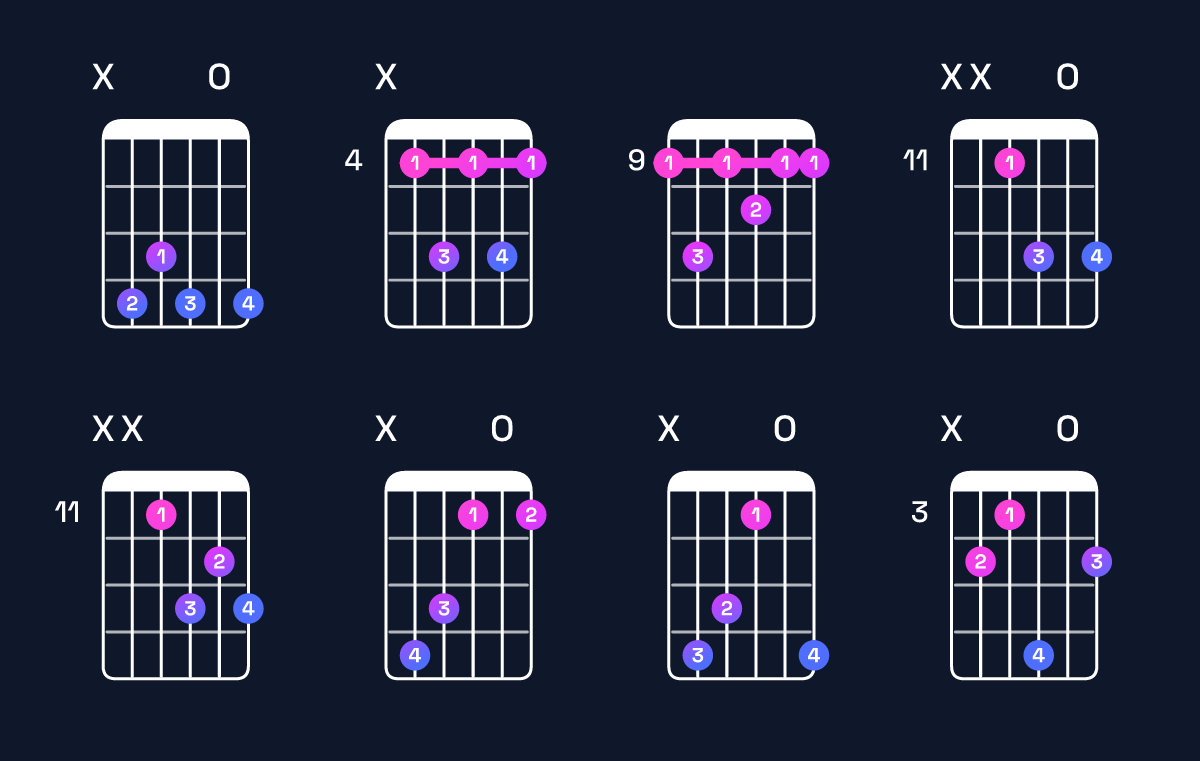
Popular fretboard positions with fingering suggestions
Showing 8 of 74 playable shapes
The D♭ dominant 7th dominant 7th chord, formed by adding a minor seventh C♭ to the major triad, creates tension that seeks resolution, typically to the tonic. The combination of the major third F and minor seventh C♭ provides a bluesy, soulful feel, making it essential in jazz, blues, and classical cadences.
Each note below shows how the chord is built from its root. This is the theory layer underneath the fretboard shapes.
The root anchors the chord and defines its tonal center.
This note defines the chord's major quality and brings brightness to the sound.
The fifth reinforces stability and gives the chord its strong harmonic frame.
The minor seventh adds bluesy or jazzy tension that wants to move onward.
Articles that reference this chord and explain how to use it in your playing.
Learn chord substitution techniques for guitar - relative minor substitution, tritone subs, diatonic substitutions, and how to use them in your own playing and songwriting.
Learn essential gospel guitar chord voicings - extended chords, passing chords, and the progressions that drive contemporary and traditional gospel music.
Apply music theory in real-time to improvise chord substitutions, select scales, and think in chord tones while soloing
Master essential jazz turnaround progressions and voice leading patterns to navigate chord changes with sophistication and fluency.
Learn techniques for adapting show tunes for guitar, reading theater charts, selecting appropriate voicings, and accompanying singers in musical theater.
Learn how to re-harmonize chord progressions on guitar. Replace ordinary chords with more colorful substitutes to transform familiar songs and create original, sophisticated harmony.